
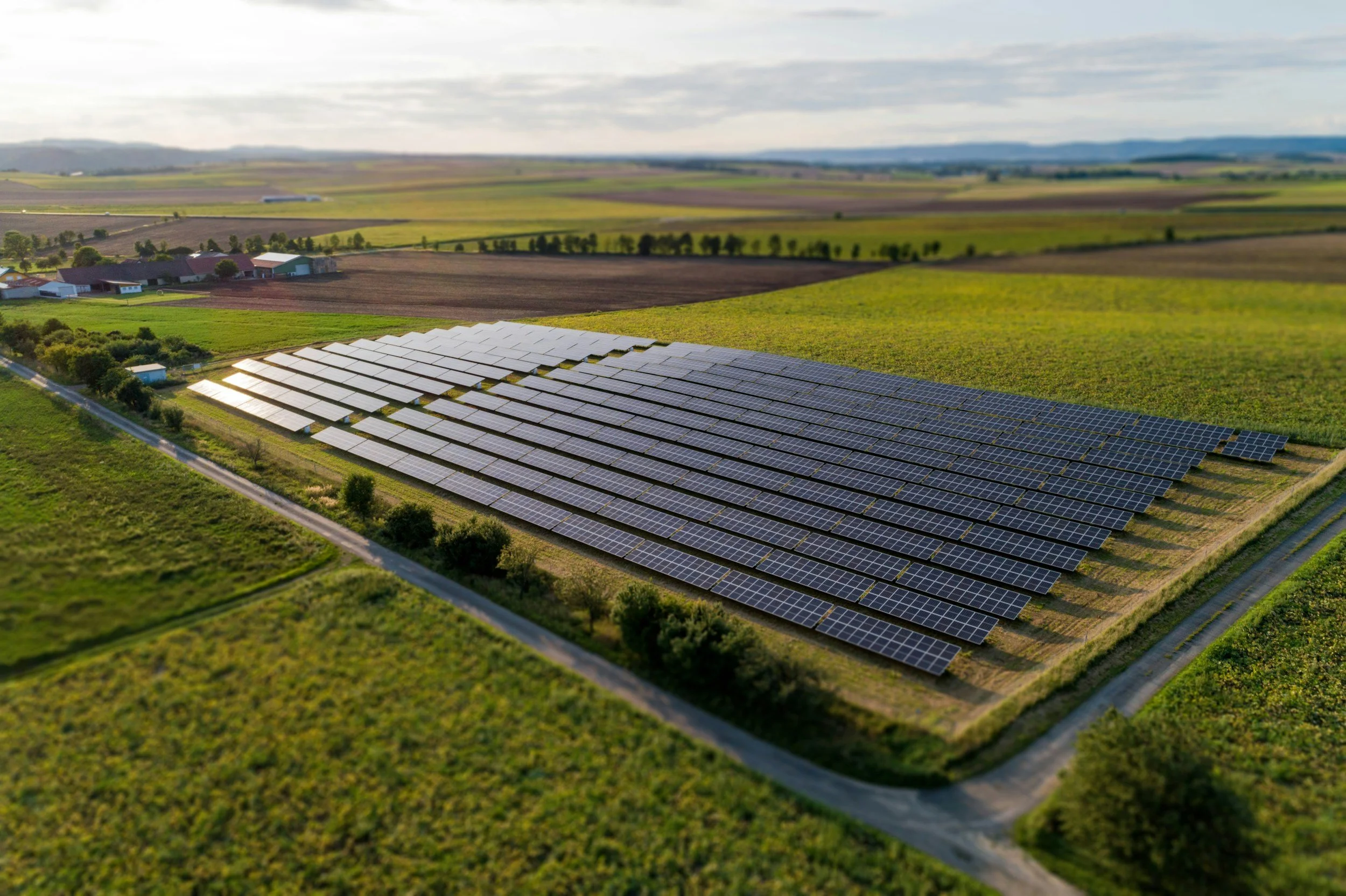
Explore Our Services:
Renewable Energy Systems
Explore our range of services designed to help you move forward with confidence, wherever you're headed next.



What We Offer
We offer a range of services to meet the needs of every client. Have something else in mind? We'd be happy to work with you to create a custom quote.
Solar PV design & installation
Battery storage integration
EV charger installs (single/three-phase)
Monitoring setup
Handover/O&M pack
Support/maintenance options
Our Process
Survey & Assess
We start with a pre-sales site survey to check roof space, shading, access routes, and your existing electrical setup. This lets us confirm what’s achievable and build an accurate design and quotation—no surprises later.
Design the System
Using your usage profile and site constraints, we design a PV system that fits your goals—panel layout, inverter/battery sizing, cable routes, protection, and monitoring. You’ll see exactly what’s being installed and why.
Paperwork & Approvals
We handle the admin end-to-end: SEAI grant paperwork, ESB application/notifications, and the documentation needed for commissioning and handover. We keep timelines clear and guide you through any steps that require your input.
Install, Commission & Support
Our team installs, tests and commissions the system, sets up the app/monitoring, and completes a full handover. After installation, we’re available for support, performance checks, and future upgrades like batteries or EV charging.
Past Project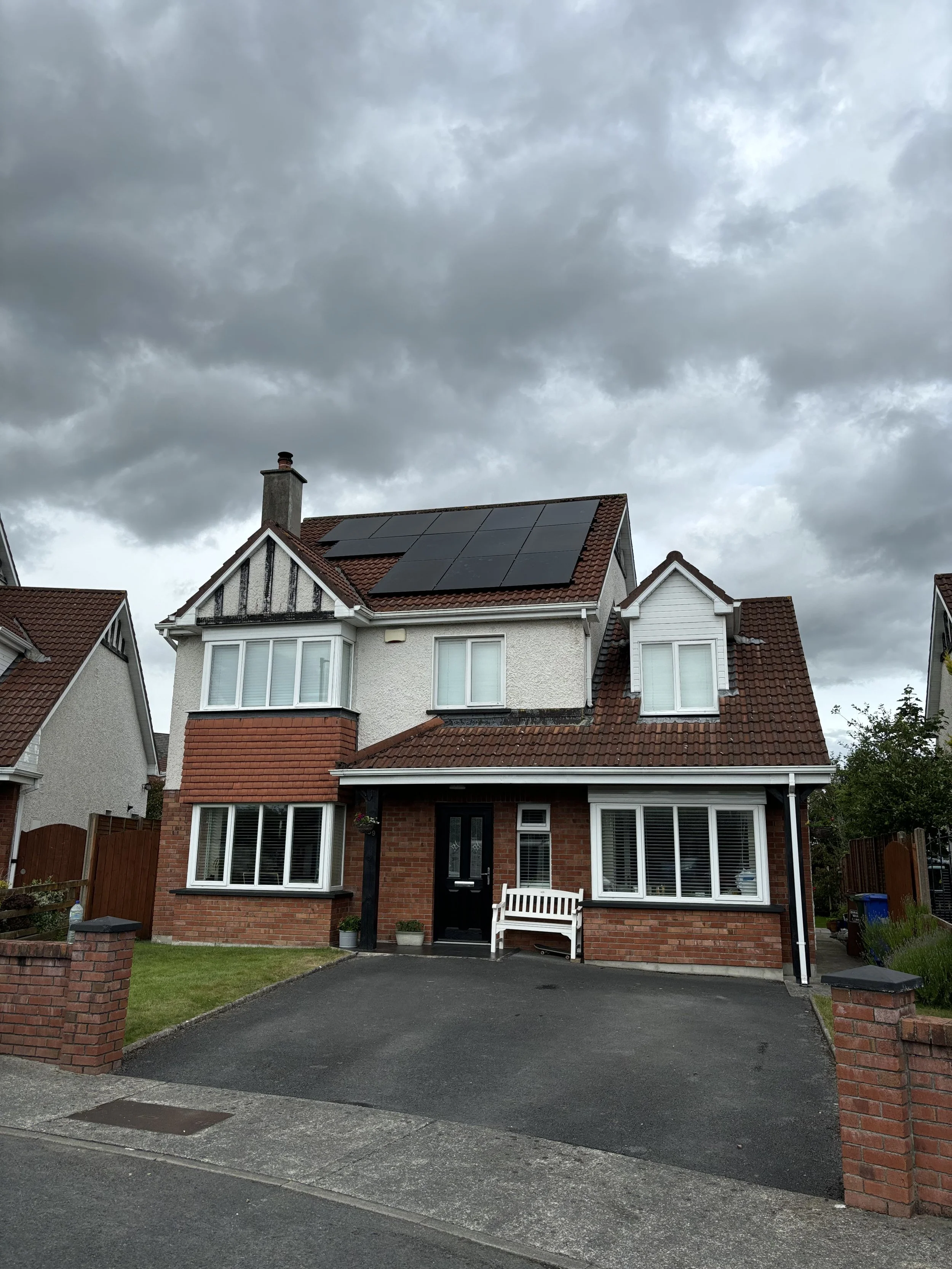
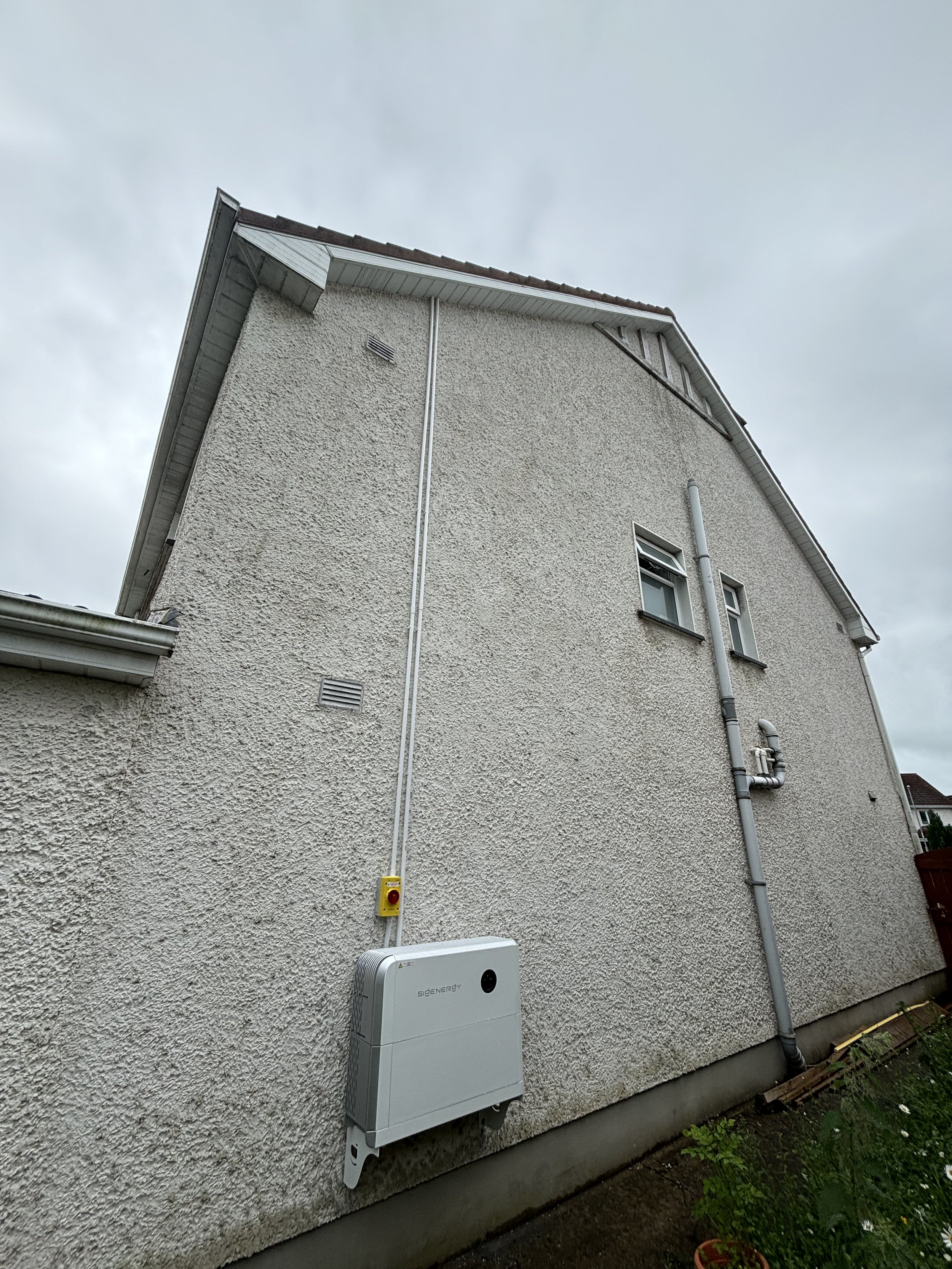
5.7kWp with 5kW Inverter & 10kWh Battery
Sleek, Simple, Effective
Your Questions, Answered
-
In many domestic cases, roof-mounted solar PV can be exempt from planning, but it depends on factors like panel placement, roof type, visibility, and whether the building is protected. For non-domestic sites, ground-mount arrays, or unusual installations, planning may apply. If you’re unsure, we can advise after a quick site review.
-
The Sustainable Energy Authority of Ireland (SEAI) offers home energy grants for Solar PV (photovoltaic) panels, providing up to €1,800 for domestic installations. The grant is calculated based on system size, offering €700 per kWp up to 2kWp, and €200 for every additional kWp up to 4kWp.
The grant can help reduce upfront cost and typically requires that the installation meets SEAI requirements and is completed by a registered installer. We handle all the paperwork associated with the grant process.
-
Yes—ESB Networks (not your electricity supplier) is the grid operator and requires a microgeneration application/notification for systems connected to the grid. The exact process depends on system size and export configuration. We handle the ESB Networks application/notification as part of the install package.
-
ESB Networks runs the electricity network (wires, metering connection rules). Your supplier is who bills you for electricity and may pay you for exported energy. Grid connection paperwork is with ESB Networks; export payments (if applicable) are with your supplier.
-
If your system exports surplus electricity, you may be eligible for an export payment (often called a microgeneration export payment) through your electricity supplier, subject to supplier terms and metering setup. We’ll configure the system to prioritise self-consumption first, then export any excess where permitted.
-
It depends on your usage pattern. Batteries can increase self-consumption by storing surplus solar for evening/night use, which can reduce grid imports. They’re often most beneficial if you use a lot of electricity outside daylight hours, have time-of-use tariffs, or want resilience and flexibility (subject to system design and backup configuration).
-
In many cases, yes. If you choose a battery-ready inverter/system architecture, adding storage later can be straightforward. We usually recommend planning for it early (space, cable routes, protection, communications) even if you don’t install the battery on day one.
-
Standard grid-tied PV systems typically shut down during outages for safety (anti-islanding). Some hybrid systems with compatible batteries can provide backup power via an essential loads arrangement—but backup capability depends on the specific inverter, battery system, wiring design, and protection.
-
Annual generation depends on system size (kWp), roof orientation, shading, location, and equipment. As a rough guide, many Irish domestic systems produce a strong portion of annual usage, but every site is different. We provide an estimated annual yield as part of the design.
-
TAMS (Targeted Agricultural Modernisation Scheme) can support certain farm investments, which may include renewable energy measures depending on the current scheme rules and eligibility. If you’re applying through TAMS, we can help with system design/specification and documentation needed for your application pathway (final eligibility rests with the scheme criteria).